Talking Objects: High quality talk through museum collections
Whose Objects? Whose Stories? (2026-27) builds on the findings of Talking Objects to explore how learning about legacies of the past can inspire thinking about more equitable and inclusive futures. An interdisciplinary team of art museum- and education-based researchers will co-design and facilitate an intervention with ten learners, encouraging critical thinking and multimodal dialogue (e.g. art making, movement, talking) through the exploration of historic and contemporary artworks and objects.
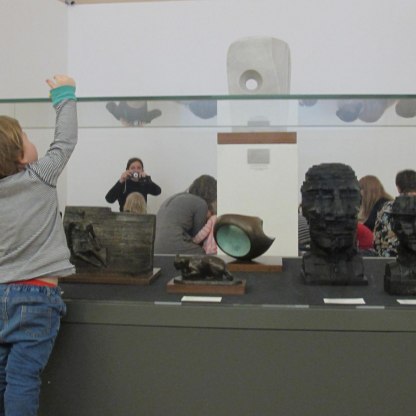
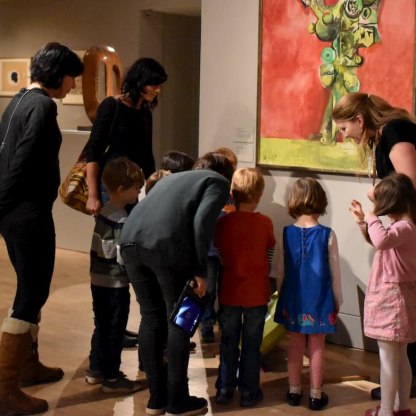
Talking Objects (2022-2026) investigates how museum objects spark meaningful conversations and critical thinking in young learners and explores the potential of museums as spaces for professional learning and exchange.
This action research project is a partnership between Camtree (Cambridge teacher Research Exchange, CEDiR (Cambridge Educational Dialogue Research), teachers, senior leaders from the Staploe Trust and museum educators from across the University of Cambridge Museums consortium.
Related publications
Practitioner Inquiry Reports
Deal, J., Tang, Z. & Rudd, B. (2026). An investigation into open-ended student dialogue in an object-oriented Year 3/4 see-think-wonder assembly, Camtree Practitioner Inquiry Report, Camtree Digital Library, https://doi.org/10.71779/772
Morrison, H., Evans, R. & Strawbridge, J. (2025). Finders Keepers? Exploring reasoning and respectful challenge in museum-based dialogue with primary students, Practitioner Inquiry Report, Camtree Digital Library, https://doi.org/10.71779/585
Wade, R., Giles, A., Skipper, N. & Tang, Z. (2026). Encouraging broader ways of talking about animals and nature: An inquiry into open-ended dialogue through museum collection with Year 2 students, Practitioner Inquiry Report, Camtree Digital Library, https://doi.org/10.71779/784
Resources
Twiner, A. et al (2026) Talking Objects Resource Pack for schools and museum based educators to support object based dialogues, Camtree and University of Cambridge Musuems
Blog Posts
Noble, K. & Twiner, A. (2025) Talking Objects: Dialogic and object-orientated learning in museums Collections-Connections-Communities blog post, 9 Apr 2026
Tang, Z., Twiner, A., Noble, K. (2026) Talking Objects: an update on findings, Resources and what's next Collections-Connections-Communities blog post, 29 May 2026
Noble, K. & Cook, C. (2023) Virtual Visits to the Art Museum, Festival Bridge Blog post
Project team
Phase 4 (2026-2027) Whose Objects? Whose Stories?
Alison Twiner and Emma Cooper (CEDiR and Faculty of Education), Kate Noble and Holly Morrison (The Fitzwilliam Museum) and Soham Village College.
Phase 4 received funding from the Cambridge Humanities Research Grant (CHRG)
Phase 3 (2024-26) Talking Objects
Sara Hennessey, Alison Twiner, Benjamin Merrick and Zixuan Tang (CEDiR and Camtree), Kate Noble, Rosanna Evans, Jacqui Strawbridge, Holly Morrison and Nicola Wallis (The Fitzwilliam Museum), Alison Giles (The Whipple Museum), Nic Skipper (Sedgwick Museum of Earth Sciences), Roz Wade (The Museum of Zoology), Scott Horsley (Kennett Primary School), Duncan Powser (Weatheralls) and Charlie McGuire (The Shade)
Phase 3 received funding from Collections-Connections-Communities Participatory Research Fund, Research England
Phase 1 and 2 (2022-23) Moving IT On
Kate Noble, Rosanna Evans, Jacqui Strawbridge, Jennie Thornber and Nicola Wallis (The Fitzwilliam Museum), Alison Giles (The Whipple Museum), Nic Skipper (Sedgwick Museum of Earth Sciences), Roz Wade (The Museum of Zoology), Carin Taylor (Staploe MAT), Scott Horsley (Kennett Primary School), Fiona Owen (Kennett Primary School), Peter Hedges (Soham Village College), Erin Munelly (Weatheralls Primary School), John Bungay (The Shade Primary School), Jane Segust (The Shade Primary School), Vic Cook, Oracy researcher and consultant
Phase 1 and 2 received funding from The Festival Bridge MovingIT On Project
Outcomes of the project
-
Co-produced research which values, recognises and supports the important contribution of educators’ practice within knowledge creation.
-
New empirical research identifying distinctive features of collections- inspired dialogue in the classroom and museum.
-
Opportunties for learners to develop confidence, oracy skills and knowledge about university collections.
Other research projects you might like
Sign up to our emails
Be the first to hear about our news, exhibitions, events and more…