A Mughal Songbook
Hear the melodies and rhythms from the Plowden Songbook
A Mughal Songbook reveals the treasure of the Plowden songbook, a rare manuscript of 77 songs in Persian, Urdu, Classical Hindi and Punjabi, brought to life through detailed illustrations of musicians, dancers, singers and courtesans.
Scroll down to find musical excerpts from the book or read more on the exhibition webpage.
Translating the Song
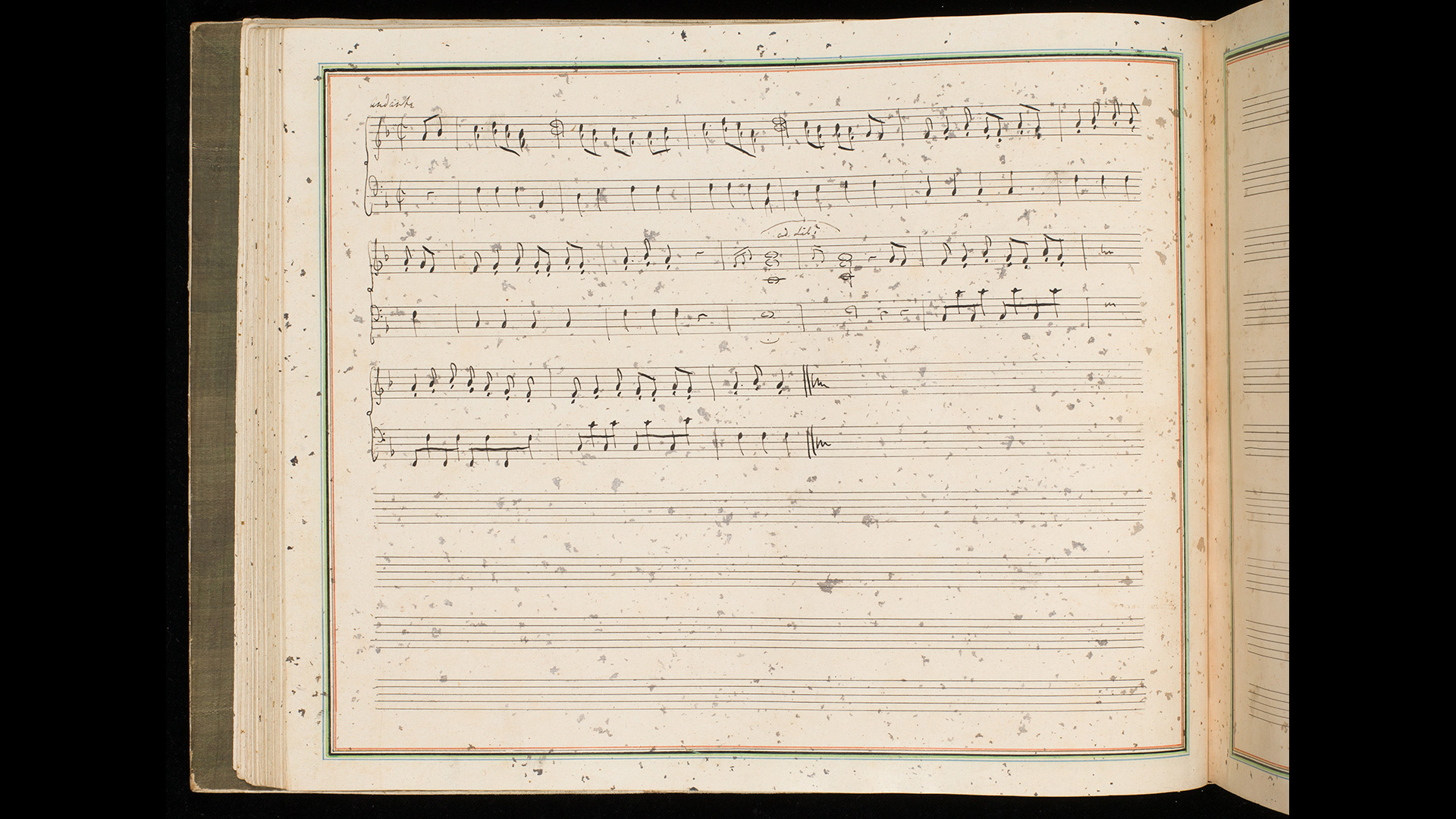
This is the musical notation for harpsichord of a ‘Hindustani air’ that Sophia Plowden heard in the gatherings of Lucknow. As it translated Hindustani songs for a British colonial context, the Plowden songbook involved the collaboration of many people. These included its patron Sophia Plowden, the legendary courtesan and performer named Khanum Jan and the Goan musician John Braganza, who likely recorded these sounds.
Painting the Song
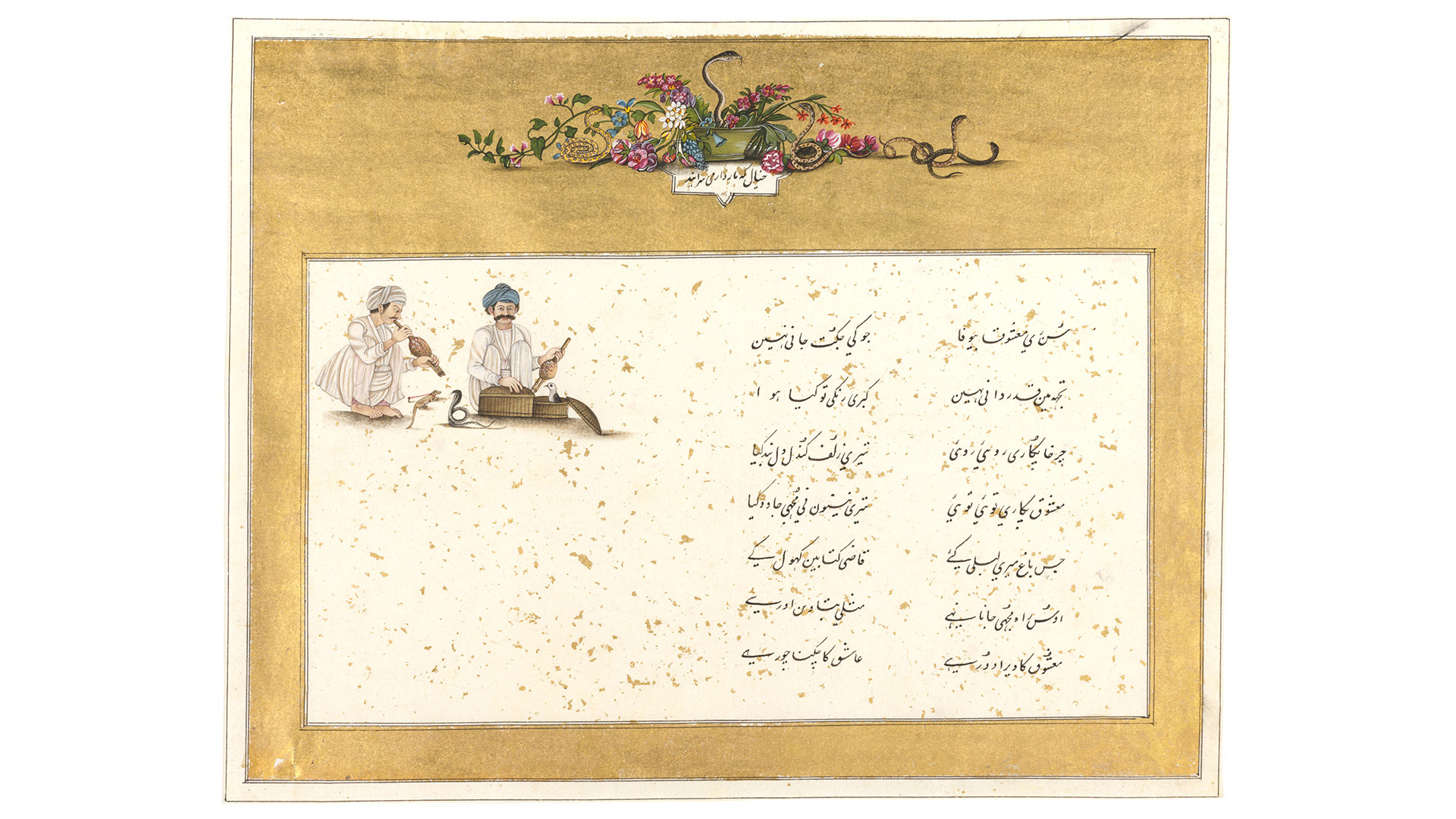
The Plowden songbook is a bound book of musical notation accompanied by 39 illustrated pages with inscribed song lyrics, 13 of which are on display. The painted pages came to the museum detached from the book. The Urdu poem here describes the beloved’s curling tresses, which bind the heart of the lover like the charmer playing a song to make a cobra dance. Painted pages like this one show how the Plowden songbook captured the vivid mental images conjured by its songs.
Listen, unfaithful beloved! As if you don’t know about intimacy…
You just can’t, so why have you become proud?
Exhausted, I cried and cried, your curling tresses bound my heart
The beloved called, ‘only you, only you, your eyes intoxicated me’
That garden in which my heart was stolen, the judge opens his books
I do not know his path, that I tell another the same
The beloved’s home is far away, the lover’s pleasure is to steal
Exporting the Song
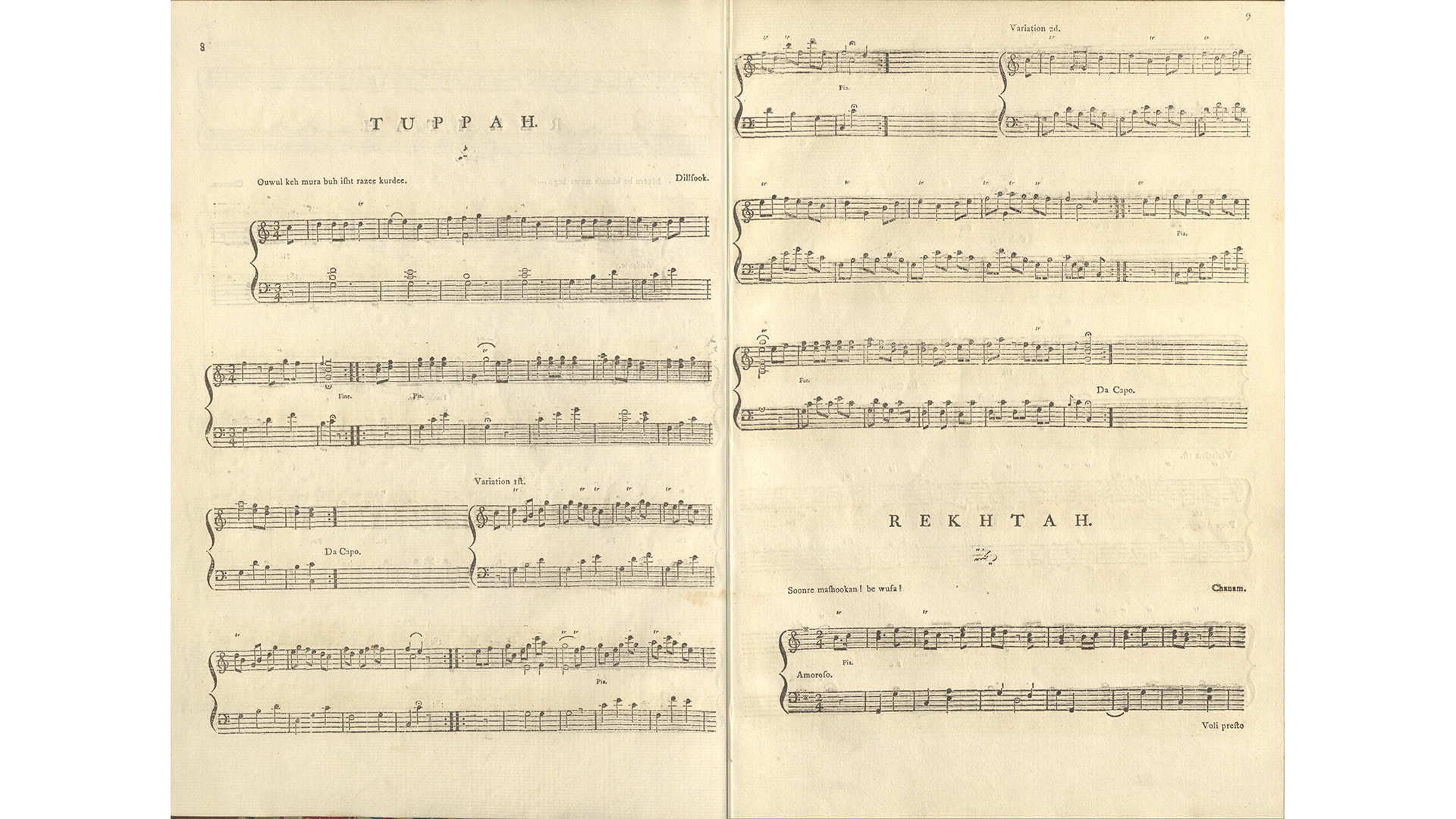
Compiled by William Bird, this is the first known translation into print of the Plowden songbook's snake-charmer song. Scholars have identified it through the lyrics of the opening refrain in Anglicised Urdu, seen at bottom right. Yet the Plowden songbook is clear that this is a khayal, the preeminent form of Hindustani music, and not the Urdu ‘Rekhtah’ or ghazal, as specified by Bird. A trace of the courtesan, Khanum Jan, survives in this song, as Bird tells us that it was performed by ‘Chanam’, or Khanum.
The Cupbearer
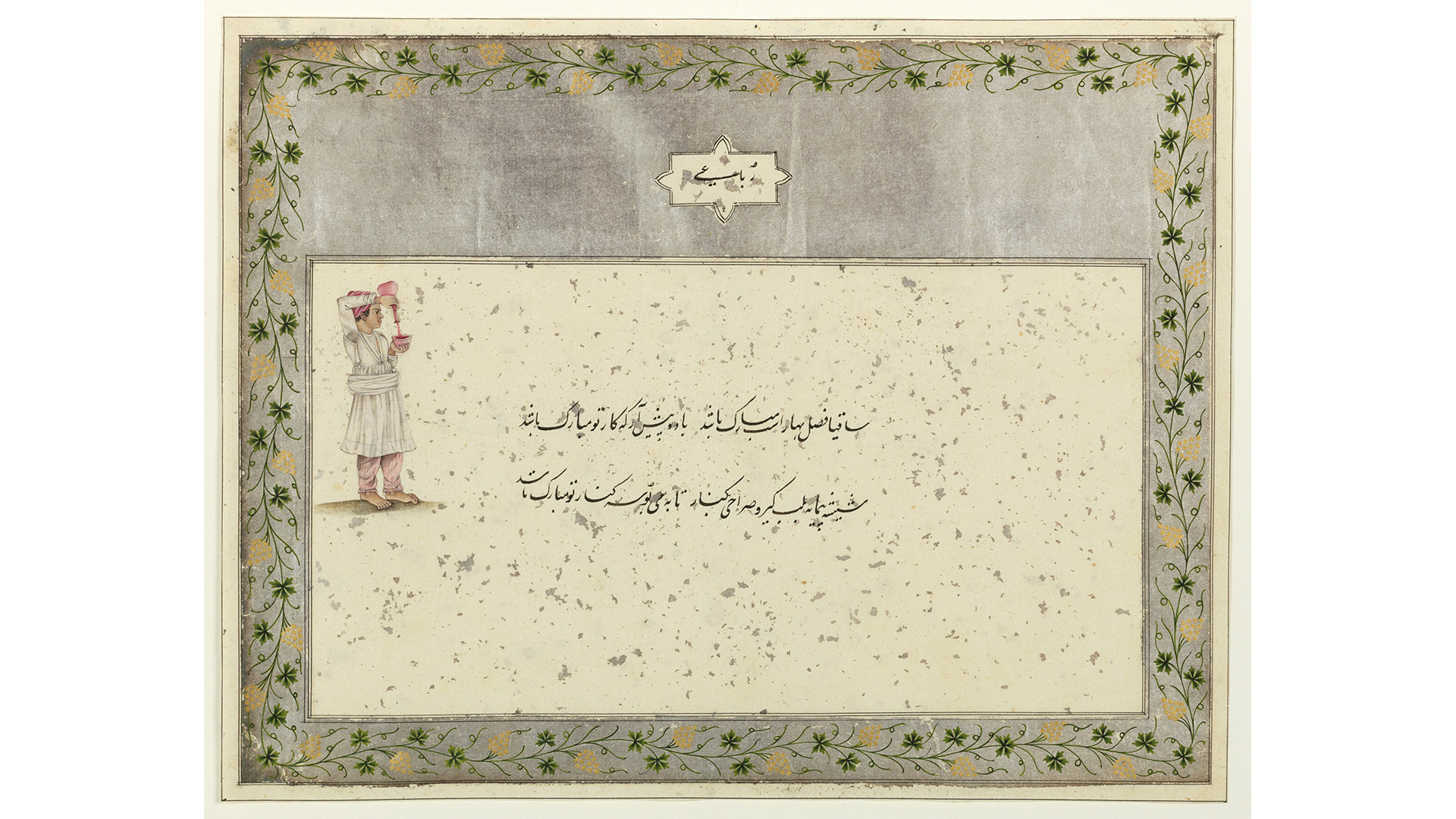
A cupbearer, or saqi, was a stock character of Persian and Urdu literature and known for keeping the party going at night-time gatherings. This rubaʿi, or four-line poem, begins with the proclamation, ‘O cupbearer (saqiya)’. The saqi, a young beautiful male who embodied the ideal beloved, is shown dispensing wine. Captivated by the cupbearer’s physical and poetic presence, the artist devoted an entire page of the songbook to him.
O cupbearer! It is the season of spring, let’s be merry!
It is your task to place the winecup before us, let’s be merry!
Bring the glass to the lip and the flask closer,
The intoxication of wine is like your intimate kisses, let’s be merry!
Poets and Painters
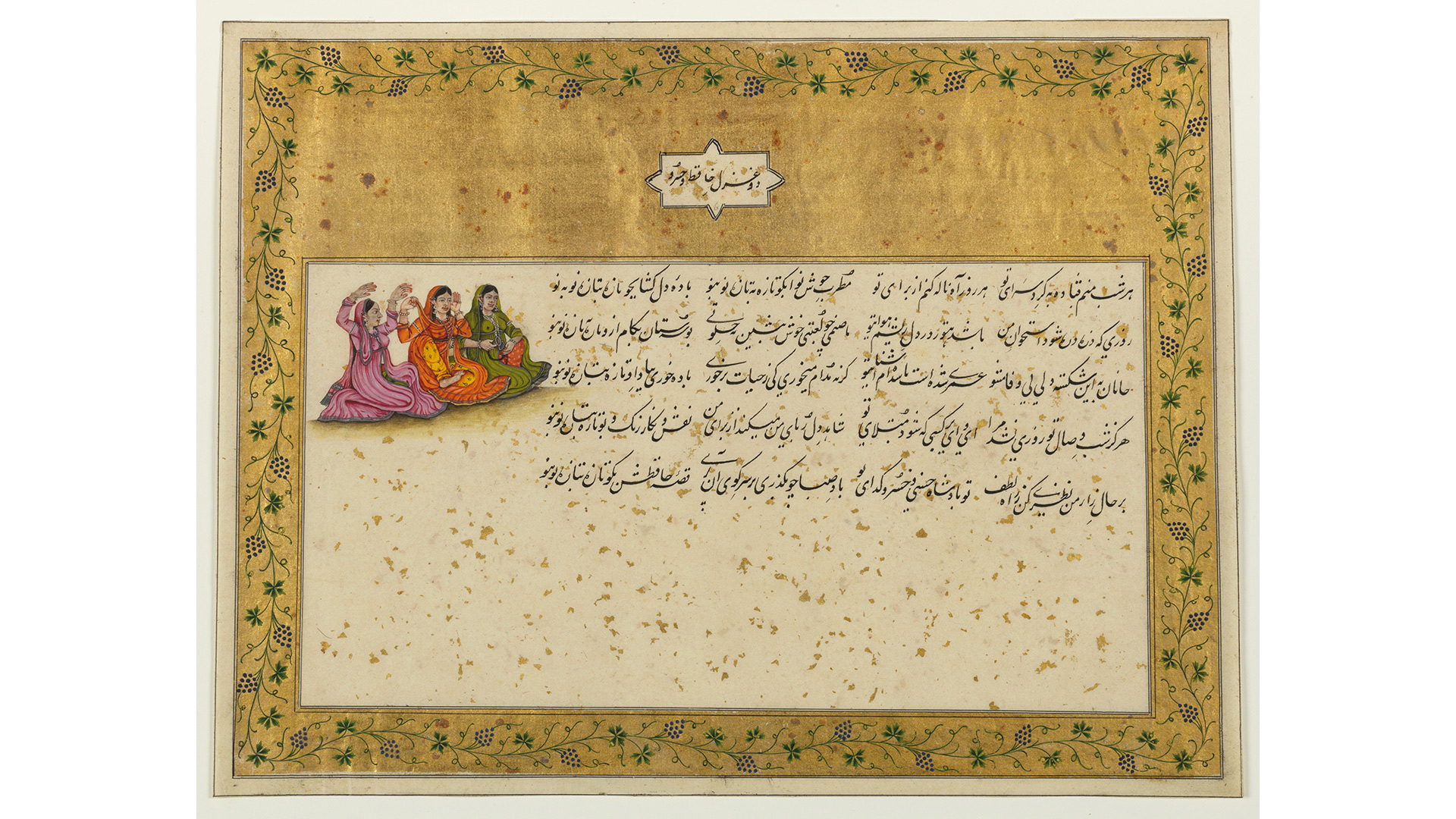
The two poems inscribed on this page attest to the long afterlives of two of the most canonical Persian poets, Hafiz Shirazi (1325–90) and Amir Khusraw Dihlavi (1253–1325), in Hindustan. The artist brings these poems alive through the energetic and ephemeral movements of women singers. Technical analysis reveals under-drawing as well as the presence of the natural pigment of Indian yellow in garments of the two women on the left.
The Socialite and Collector
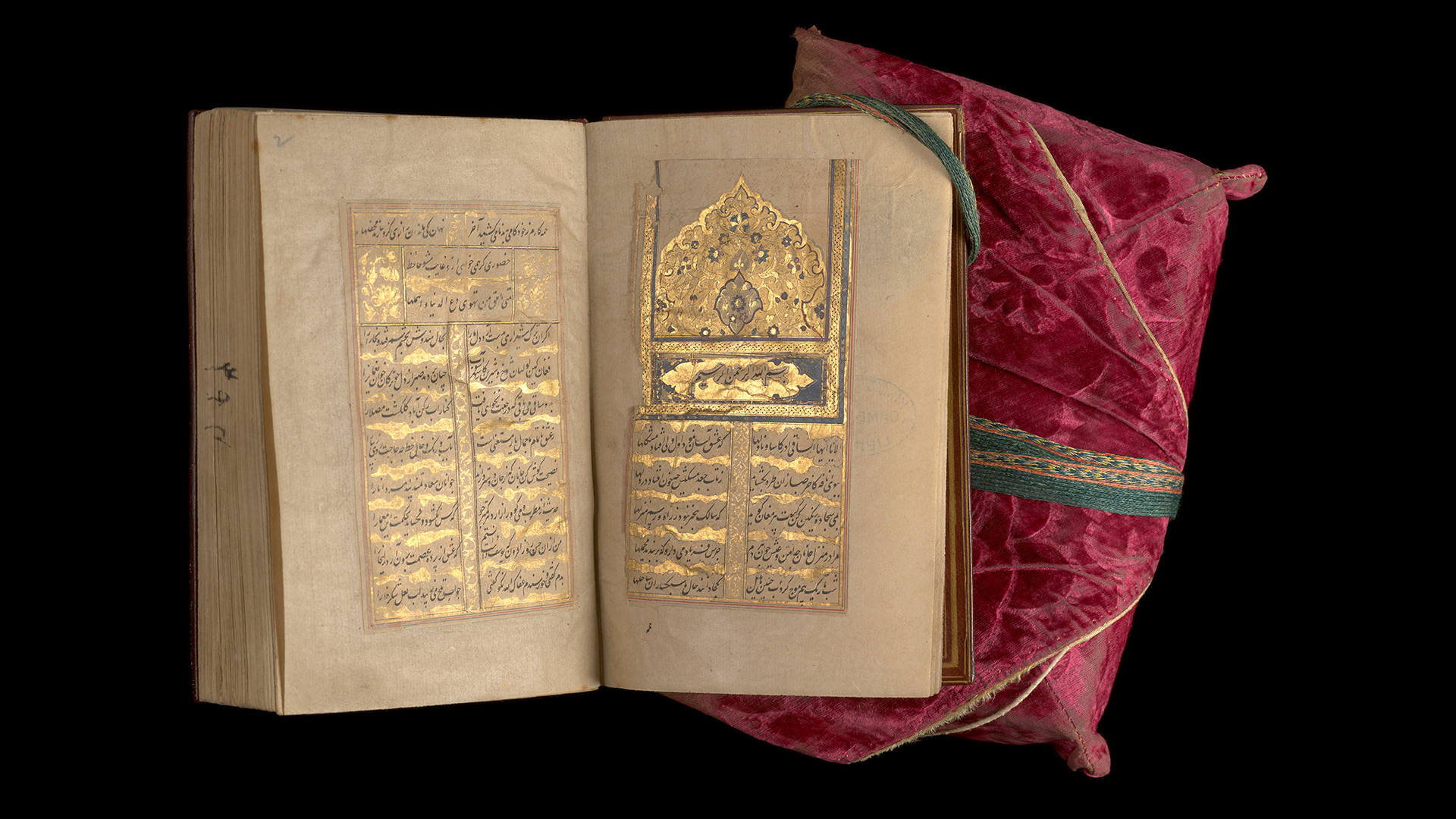
Poetry circulated in books, the oral tradition and, as the Plowden songbook reveals, in music. The poem shown here by Hafiz corresponds closely to the lyrics of the ‘Hindustani air’ on the left. This manuscript was itself a mobile object, for which an elegant velvet bag was fashioned at some point. It was inscribed by calligrapher Shiv Ram Das Surjadh in central India. The Swiss merchant and collector Antoine-Louis Henri de Polier (1741–95), a foreign socialite of Lucknow like Plowden, eventually acquired it.
Games of Love
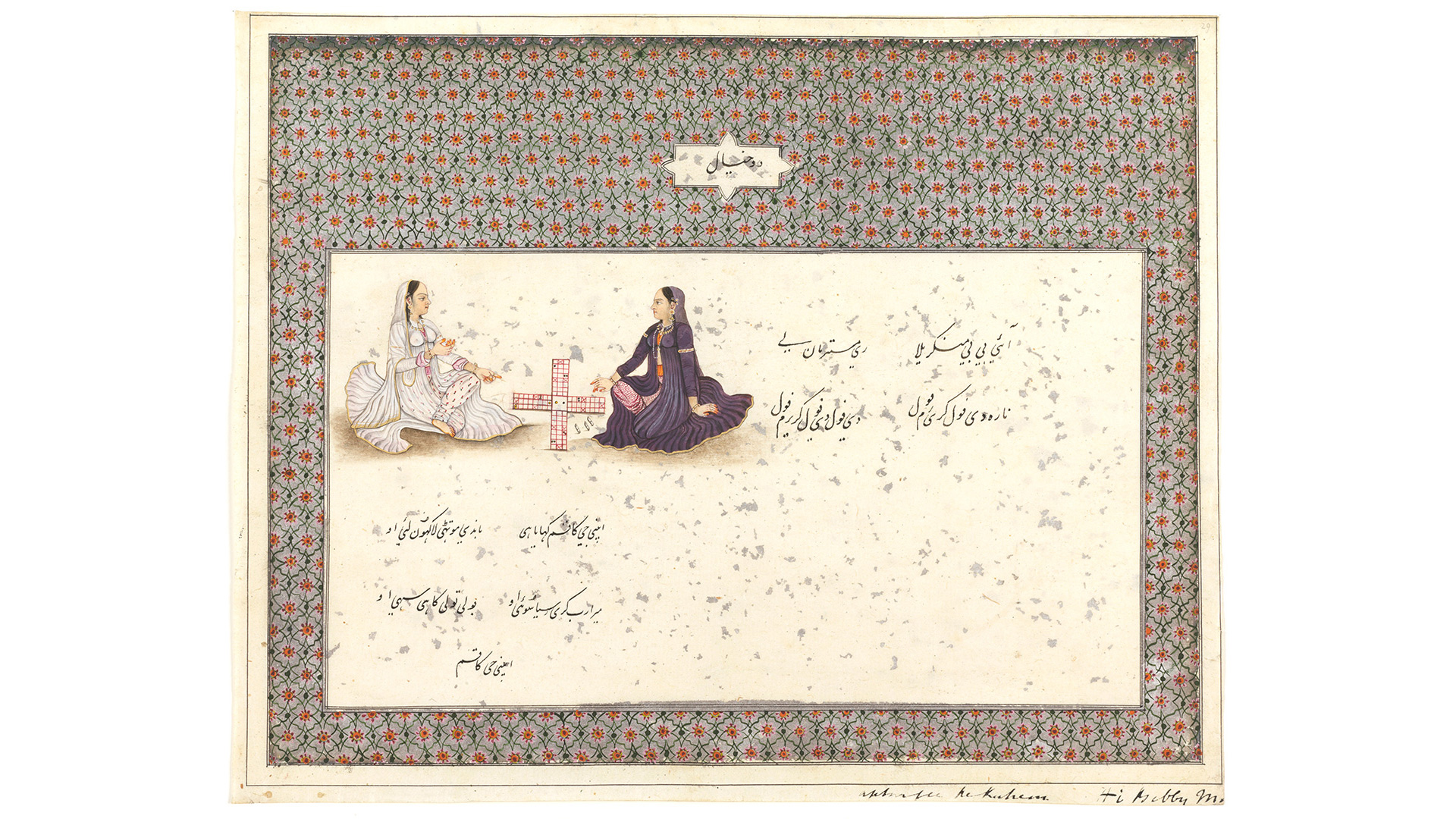
It looks like this game of chaupar is currently tied, as the women have one piece each in the central square. With eyes locked, one points to the board, challenging the other to make her move. The song on the right sounds like the taunts of a lover’s quarrel, and the song below is about someone praying for things to go their way. Such lyrics could represent the playful banter uttered between friends and lovers.
Music courtesy of Signum Records
Sign up to our emails
Be the first to hear about our news, exhibitions, events and more…