History
of the Museum and its collections
Contents
History
The Fitzwilliam Museum was described
by the Standing Commission on Museums & Galleries in 1968
as "one of the greatest art collections of the nation and a
monument of the first importance". It owes its foundation to
Richard, VII Viscount Fitzwilliam of Merrion who, in 1816,
bequeathed to the University of Cambridge his works of art
and library, together with funds to house them, to further "the
Increase of Learning and other great Objects of that Noble
Foundation".
Fitzwilliam's bequest included 144 pictures, among them
Dutch paintings he inherited through his maternal grandfather
and the masterpieces by Titian, Veronese and Palma Vecchio
he acquired at the Orléans sales in London. During
a lifetime of collecting, he filled more than 500 folio albums
with engravings, to form what has been described as "a vast
assembly of prints by the most celebrated engravers, with
a series of Rembrandt's etchings unsurpassed in England at
that time". His library included 130 medieval manuscripts
and a collection of autograph music by Handel, Purcell and
other composers which has guaranteed the Museum a place of
prominence among the music libraries of the world. |
|
In 1848 the Founder's Building, designed by George Basevi
(1794-1845) and completed after his accidental death by C R
Cockerell (1788-1863), opened to the public. Throughout the
nineteenth and twentieth centuries, the collections have grown
by gift, bequest and purchase; their history is a continuous
one which traces the history of collecting in this country
over the last two hundred years. If the Museum owed its foundation
to a Grand Tourist, it went on to benefit from the shift of
taste towards the Middle Ages and the early Renaissance for
which the Gothic Revival of the nineteenth century was responsible.
By the same token, many of the Museum's early twentieth century
benefactors may be counted among the heirs to the Arts and
Crafts and Aesthetic Movements. In recent years, the Museum's
traditional base of support from alumni and private collectors
has been augmented by generous provision from the National
Art Collections Fund and other charitable organisations and
public bodies, including H M Treasury (under the provision
for the allocation to Museums of works of art accepted in lieu
of capital taxes). Today, the Museum pursues a vigorous acquisitions
policy as one aspect of its abiding commitment to hold the
nation's "treasures in trust". The Standing Commission's view
is both echoed and expanded by the University itself:
"The Fitzwilliam Museum is one of the greatest glories
of the University of Cambridge. It is a museum of international
stature, with unique collections most splendidly housed...
Like the University itself, the Fitzwilliam Museum is part
of the national heritage, but, much more, it is part of
a living and continuing culture which it is our statutory
duty to transmit".
Few museums in the world contain on a single site collections
of such variety and depth. Writing in his Foreword to the
catalogue of the exhibition for Treasures from the Fitzwilliam which
toured the United States in 1989-90, the then Director of
the National Gallery of Art in Washington, DC, wrote that "like
the British Museum, the Fitzwilliam addresses the history
of culture in terms of the visual forms it has assumed, but
it does so from the highly selective point of view of the
collector connoisseur. Works of art have been taken into
the collection not only for the historical information they
reveal, but for their beauty, excellent quality, and rarity...
It is a widely held opinion that the Fitzwilliam is the finest
small museum in Europe".
|
|
|
1. Antiquities
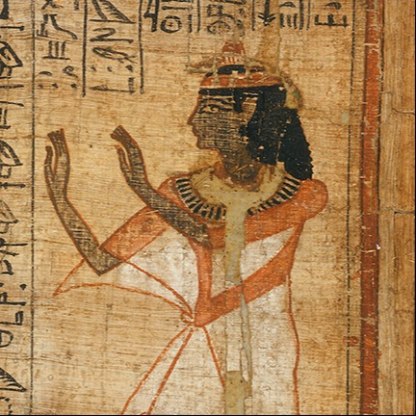
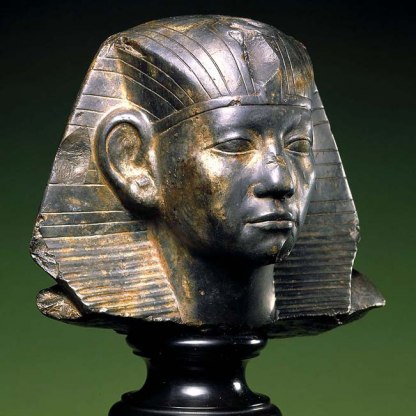
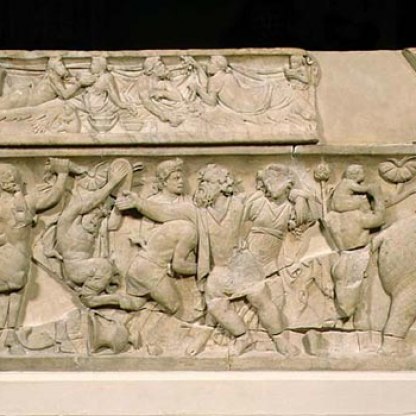
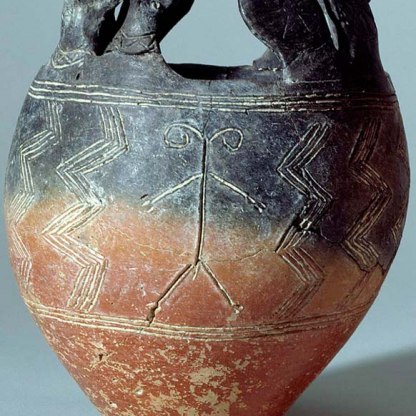
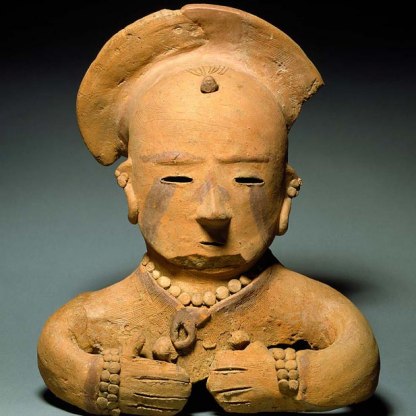
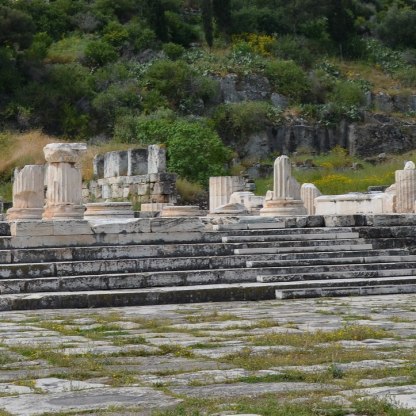
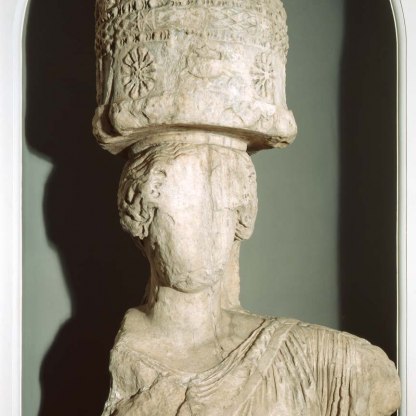
The Department of Antiquities is chiefly devoted to the
art of the ancient civilisations from which our own culture
is ultimately derived - Western Asiatic, Egyptian, Greek
and Roman - from the beginnings of urban settlement down
to the start of the Middle Ages (c.12,000 BC - 900 AD). John
Disney's gift of Classical sculptures in 1850 and the purchase
in 1864 of the Leake Collection of bronzes, vases, terracottas
and gems from Greece and Italy were both landmarks, to which
the bequest by Ricketts and Shannon in 1937 added a significant
number of important objects. Although G B Belzoni's splendid
gift to the University of the sarcophagus lid of Rameses
III may be regarded as initiating the collection of Egyptian
antiquities, it owes its present distinction (and international
significance) to twentieth century benefactors, among whom
R G Gayer-Anderson (1943) and Sir Robert Greg (1954) deserve
to be singled out. Over the years, the Department of Antiquities
has also benefited from the gifts of the Egypt Exploration
Society, the British School of Archaeology in Egypt, the
British School in Athens and the Cyprus Exploration Fund.
Today, the department looks after more than 25,000 objects
in a wide range of materials (including stone, terracotta,
metal, glass, wood, bone and textiles). It is widely regarded
as one of the finest collections in the country and is consulted
regularly by scholars from all over the world.
Please note that this is a general description of this part
of the collection
and all the items described here may not yet be available
on OPAC.
Related links:
|
 |
Top
|
 |
2. Applied Arts
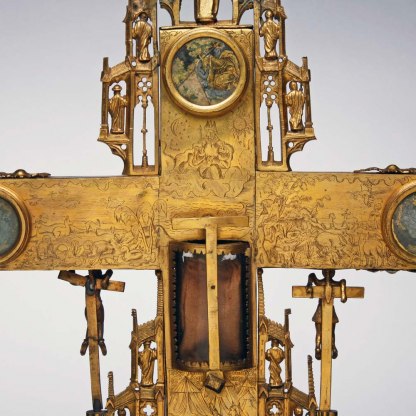
The Department of Applied Arts contains some 18,500 objects
from Europe, the Near East and the Far East. It owes its
exceptional collections of English and Continental ceramics
(9,780 items) largely to the infectious enthusiasm of James
Whitbread Lee Glaisher (d.1928) and, for glass, to Donald
Beves (d.1961). There are smaller, but choice collections
of European arms and armour (much of it bequeathed by J S
Henderson in 1933); Limoges enamels, English and Continental
silver, jewellery and objets de vertu; furniture (including
notable English clocks given and bequeathed by J Prestige);
textiles (especially samplers) and fans, mainly the Messel-Rosse
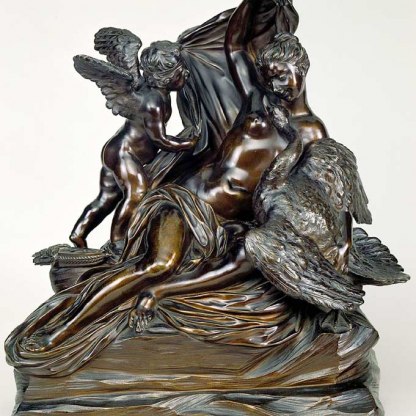
collection. The sculpture collection ranges from medieval
ivories to works by contemporary artists. The bequest by
Mrs Sherek in 1995 of the remainder of the Boscawen Collection
of European bronzes not only re-unites that collection but
in the opinion of at least one leading expert, transforms
the Museum's holdings in that area. The Department's non-Western
holdings include an excellent collection of Islamic rugs,
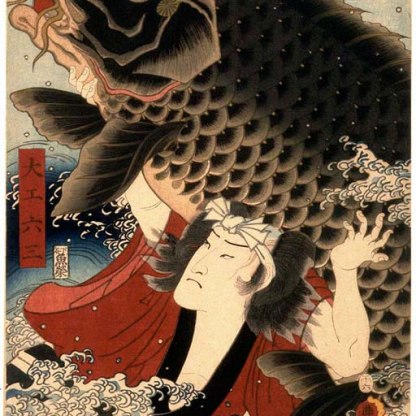
pottery and glass, and from the Far East, it preserves fine
examples of Chinese porcelain, bronzes and jade and textiles;
Japanese ceramics, lacquer and sword furniture; and thanks
to the gift of G St G M Gompertz in 1984, an important collection
of Korean ceramics.
Please note that this is a general
description of this part of the collection
and all the items described here may not yet be available on OPAC.
Related links:
|
|
3. Coins and Medals
The Department
of Coins and Medals was initiated in 1856 when coins
accumulated by the University were transferred from the
Library to the Museum. The Greek coins, based on the cabinet
of some 12,000 coins purchased from Lt Col W M Leake in
1864, and supplemented by the collections of J R McClean
and others, are outstanding. The Department has major holdings
of Roman and Oriental coins among which the imperial gold
portrait pieces which were given by A W Young in 1936 are
exceptional. The largest part of the collection outside
the ancient series is that of Great Britain, from Celtic
times to the present, and thanks to the deposit of Professor
Philip Grierson's European coins and the acquisition of
Christopher Blunt's British coins, its medieval collection
is the most complete in existence. The Department also
preserves numerous engraved gems and cameos and fine Italian
and foreign medals from Pisanello onwards. The collection
of English medals was enriched by the gifts of A W Young
in 1936 and by the bequest of Miss M E Grimshaw's school
medals in 1989. The department holds on deposit significant
collections of both coins and medals which belong to several
of the Cambridge Colleges. In all, there are some 160,000
items in its care.
Please note that this is a general
description of this part of the collection
and all the items described here may not yet be available on OPAC.
Related links:
|
 |
Top
|
 |
4. Manuscripts and Printed Books
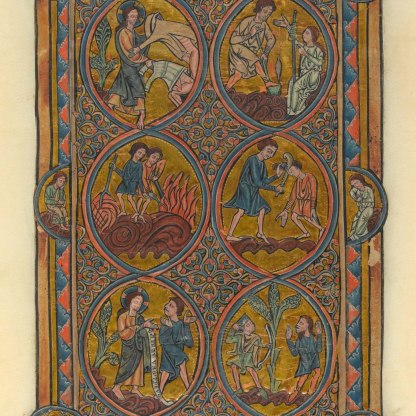
The Founder's Bequest included 130 medieval manuscripts,
all of them acquired between 1789 and 1815, and many of them
of the highest quality. After that promising start, progress
was desultory until the late nineteenth century, when the
Museum benefited from the revival of interest in medieval
art. In 1895, when M R James published his Descriptive Catalogue
of Manuscripts in the Fitzwilliam Museum, he launched an
appeal to collectors which was answered by the magnificent
bequest of 203 medieval manuscripts by Frank McClean in 1904,
by Charles Fairfax Murray's gifts of thirty manuscripts in
1904-5 and by C B Marlay's bequest which included eighteen
manuscripts and hundreds of cuttings. In all the collection
now totals over 1,000 items.
The Founder's Library of about 10,000 volumes reflects the
varied interests of a gentleman-scholar in the 18th Century.
The majority of the books are housed in the room which C
R Cockerell designed for them in 1848 where in addition to
their practical use to scholars, they comprise an important,
historical collection. The Music Collection contains over
1,400 volumes, including a large number of manuscripts, ranging
from the Fitzwilliam Virginal Book to scores by twentieth-century
composers including Vaughan-Williams.
The manuscript of Keats' Ode to A Nightingale is perhaps
the most famous literary autograph in the collection, which
also includes works by Blake, Hardy, Housman, Morris, Rossetti,
Swinburne, Tennyson and Thompson. Letters, ledgers and sitter-books
by artists are an especial interest, to which the recent
acquisition of the extensive archives of Robersons, colourmen
and artists' suppliers and the bequest of artists' manuals
by Peter Bicknell (1995) has added further dimensions. Finally,
when the former Secretary of the Kelmscott Press, Sydney
Carlyle Cockerell, became Director in 1908, he saw to it
that the Museum became a repository for the fine editions
printed by virtually all of the English private presses of
the early twentieth century. These bring the total of rare
printed books in the collection to some 30,000 volumes, while
autograph materials add up to some 52,000 items.
Please note that this is a general
description of this part of the collection
and all the items described here may not yet be available on OPAC.
Related links:
|
Top
|
5. Paintings, Drawings and Prints
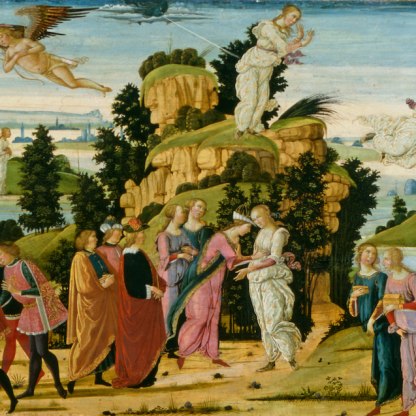
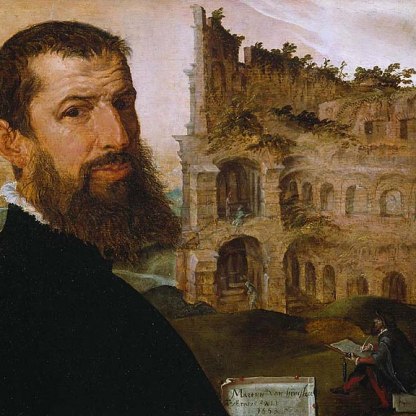
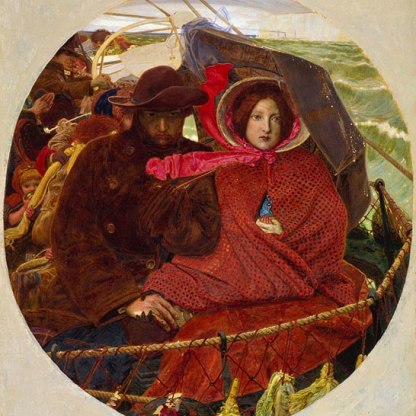
The Founder's collection of paintings began with the Dutch
and Flemish pictures he inherited from his maternal grandfather,
Sir Mathew Decker, Bt, an Amsterdam merchant born in 1679.
To these his most spectacular additions were among the nine
paintings he bought from the Orléans collection: Titian's
Venus, Cupid and the Lute-player, Palma Vecchio's Venus
and Cupid and Veronese's Hermes, Herse and Aglauros.
All three share the same princely provenance: (?) Rudolph
II of Prague; Christina of Sweden, Ducs d'Orléans.
In 1834, the collection was augmented by 243 pictures, mostly
Dutch and Flemish, bequeathed by Daniel Mesman. (Outside
London, the Fitzwilliam boasts the most comprehensive Collection
of Dutch
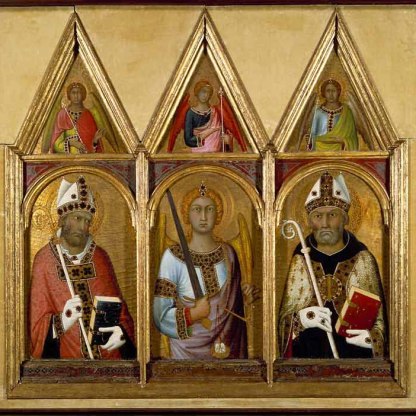
paintings in Britain). In 1893, the Museum purchased
fifteen early Italian paintings from the Charles Butler collection
among which three
panels of saints, three-quarters length,
painted c.1320 by Simone Martini are outstanding, to be rivalled
in the same field only by Professor F Fuller's bequest in
1923 of two of the predella panels from Domenico Veneziano's
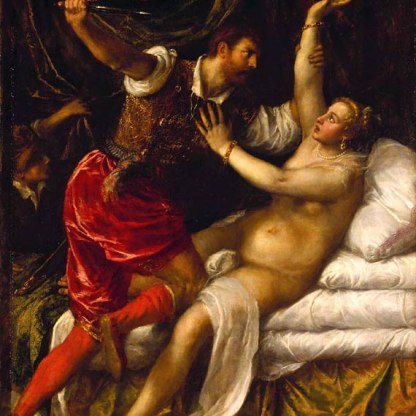
St Lucy altarpiece. In 1908, Charles Fairfax Murray made
the first of his gifts which included three early Gainsboroughs,
three Hogarths, a Reynolds and, as a centenary gift in 1916,
Titian's incomparable late painting for Philip II of Spain,
of Tarquin and Lucretia. During the twentieth century,
the Collection of French
paintings has grown with important
acquisitions by virtually all of the major artists, from
Poussin and Claude to Degas, Monet, Cézanne and Matisse.
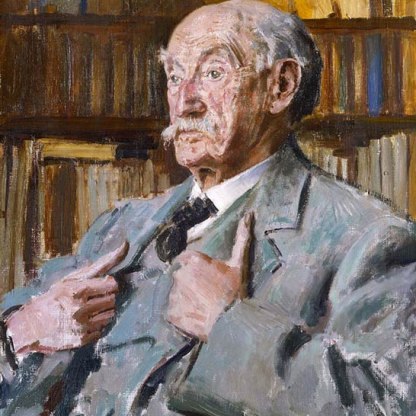
The bequest by John Tillotson in 1984 of thirty-two paintings
by Barbizon painters and, that of Dr McDonald in 1991 of
a wide-ranging Collection of pictures, especially rich in
decorative paintings from the eighteenth century, have further
enriched the Museum's French holdings. In the later twentieth
century, gifts and bequests are headed by Alistair Hunter's
collection of art of the present century, including Picasso's Cubist
Head of 1910 and the second Lord Fairhaven's comprehensive
collection of flower paintings and drawings, which comprises
over seventy oils, more than nine hundred individually mounted
works on paper and forty-four volumes of drawings by Ehret,
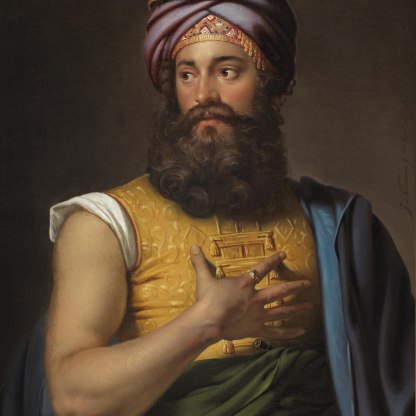
Redouté and others. Among drawings, the largest holding
is British (approximately 5,600). It began with the Founder's
nostalgic memories of Italy drawn by J R Cozens, augmented
in the early years by George Romney's son, the Revd John
Romney of St John's College, and at mid-century by John Ruskin
who initiated the fine collection of Turner watercolours
with the gift of twenty-five representative sheets. The bequests
of J R Holliday in 1927, F H H Guillemard in 1933, Sir Frank
Brangwyn in 1943 and T W Bacon in 1950, have strengthened
it still further.
|

|
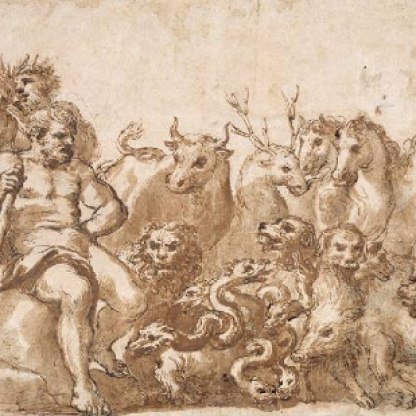
The Museum's collection of Dutch drawings was
transformed by the bequest of almost a thousand by Sir Bruce
Ingram in 1963. Among the 627 Italian drawings, the gift of
G T Clough in 1913 included sheets by Michelangelo and Raphael,
and those bequeathed by a former Director, Louis C G Clarke,
in 1960 provide some of the other highlights, by Leonardo,
Correggio and Parmigianino. More recently, the benefaction
of A S F Gow (1978) has added significantly to the later French
drawings, which number 576. Mention should also be made of
the 400 Indian and Persian miniatures, most of which were bequeathed
by Manuk and Coles in 1948, representing a small but distinguished
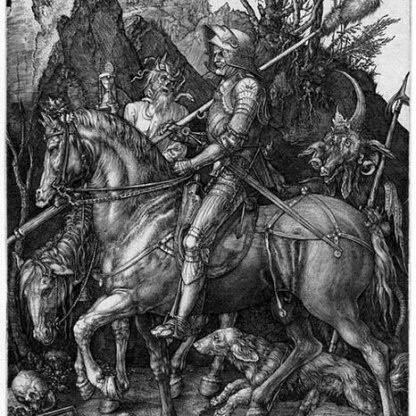
collection of the principal schools. By any standard, the Museum's
collection of prints which began with the Founder's folios
and was augmented in the nineteenth century by the transfer
of prints from the University Library, is vast. It stands at
upwards of 200,000 impressions and continues to grow at an
impressive rate; since 1988, 3,064 prints have been accessioned,
including a considerable number by American artists. We believe
that the Fitzwilliam Museum is the only institution in this
country apart from the British Museum to collect systematically
in this area.
Please note that this is a general description
of this part of the collection
and all the items described here may not yet be available on OPAC.
Related links:
|
 |
Top
|
|